09:30AM, Monday 12 January 2026

MID-WINTER is often the time of year people start to think about where they would like to go in the warmer months. We are spoilt for choice with so many interesting places to visit in the British Isles. It amazes me that such a small area of land can be so geographically diverse and therefore have so many different habitats for wildlife.
Here’s a New Year puzzle for you. Have you ever heard of Wormwood Moonshiner, Violet Click, Cliff Comber, Eyed-Longhorn, Noble Tortoise, Plantain Leaf, Tansy, Strandline, Lundy Cabbage Flea, Short-necked Oil, Mediterranean Oil and Black Oil?
They are all fantastic names of beetles and all endangered species only recorded in one or two places in Britain. They are also subject to recovery measures to improve their habitat and food source.
According to the winter issue of Buzz, published by Buglife (the Invertebrate Conservation Charity), some beetles like the violet click beetle are very hard to find. This long thin black beetle breeds in the hollows of ancient decaying ash and beech trees. They are only found in three places in England, Windsor Forest being the nearest to us.
If you are going to the Norfolk seaside this year, you might be lucky enough to see the nocturnal cliff comber beetle, which has only been recorded at three sites on the coast.
The eyed longhorn beetle is on the critically endangered list as it is only known to be in one site in Cambridgeshire. They are associated with willow stands and wet woodlands. Searchers for them are more likely to find the scars on willow branches known as “dragon’s teeth” that the female beetle makes with her long ovipositor when laying her eggs into the wood.
In Northern Ireland important work is going on to conserve the noble tortoise beetle, a small oval-shaped beetle with a golden shine across its wing covers. They live on coastal stands of orache and spurry on the strandline.
A lot of our British beetles’ food sources and habitats are being destroyed by various means. That is the case for the tansy beetle, also known as the “Jewels of York”, a beautiful iridescent green beetle that feeds on the tansy plant. It is widespread in Europe but on the Red List of endangered species of conservation importance in England. It is limited to a 46km stretch of the River Ouse in York, with small numbers in the East Anglian fens.
One threat to its survival is the more frequent summer flooding along the Ouse (due to climate change), so their eggs and larvae get washed away.
Other threats are overgrazing by livestock and invasive species such as Himalayan balsam, various grass species, nettle and creeping thistle. To make matters worse some of the tansy plants are being removed along some stretches of the river as they are being mistaken for ragwort.
A special recovery project is looking for volunteers to survey the strandline beetle, one of the rarest beetles in England. It lives along the high tide line of sandy beaches which are backed by towering sand dunes. It has not been recorded on beaches along the English Coast since 2002.
The project covers the coast along the Bristol Channel to Bude. The beetles hide under driftwood so if you find one, please photograph it in situ then replace the driftwood. To learn more about this project go to “Search for the Strandline Beetle” on Buglife’s website.
While you are in North Devon you might like to pop across to Lundy Island, famous for its puffins and other wildlife. It is also the home of the Lundy cabbage. This is endemic to the island, meaning it is not found anywhere else in the world. It is also unique in the UK as it is the only endemic plant known to support an endemic invertebrate — the Lundy cabbage flea beetle. This tiny insect is nationally rare, critically endangered and is a global conservation priority.
Buglife works with partners around the country including several in South Devon for the Life on the Edge project. This is working with farmers and landowners to restore wildflower-rich cliff tops and grasslands and other wildflower-rich habitat.
Three species of oil beetles are found in the area — the short-necked, Mediterranean and black oil beetles.
All three have interesting life cycles. The female digs a short burrow and lays up to 1,000 eggs. Once they hatch, the tiny larvae, known as triungulins (a good Scrabble word), climb to the top of the nearest flower. There they wait for a solitary mining bee to arrive. They grab on to the bee and are carried back to its nest where the triungulin eats the pollen stores and either the eggs or the larvae of the bee. It will stay in the bees’ nest where it will pupate, eventually emerging as an adult oil beetle.
Hopefully this whistle-stop tour of endangered beetles in the UK may have whet your appetite to visit different areas and find out about the species being conserved. Perhaps you might consider volunteering with counts and surveys.
However, if you want to do something simple to help beetles in your own outdoor space, you could create a deadwood pile. Beetles, spiders and other insects use piles of dead, damp and rotten wood as a place to shelter and find food. Deadwood is not such a common sight now as it is cleared away to make places look tidier.
The examples above are all endangered species of beetles, however there has been a dramatic decline in all insects.
Bugs Matter has carried out yearly citizen surveys of flying insects collected on vehicle number plates after long journeys. Their numbers have decreased by a staggering
59 per cent in five years.
Why are insects so important? They are brilliant recyclers, breaking down waste to recycle the nutrients. One in three mouthfuls of food depends on pollination, as does
90 per cent of wildflowers.
Insects are food for bigger creatures. No bugs means no songbirds, no badgers, no frogs, no freshwater fish — our countryside would be empty. Think of that!
………...........................................
I’VE also been catching up with the Bat Conservation Trust, whose research shows that ancient buildings such as churches are vital wildlife refuges.
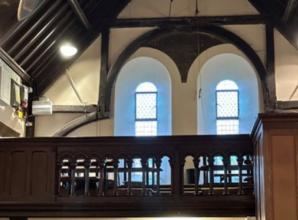
It is believed that more than 8,000 church buildings nationally host bat roosts, providing an extraordinary network of biodiversity refuges hidden in plain sight. Does St Mary’s Church in Henley host bats? Possibly the external lighting might be too distracting for them. However, we know that swifts nest in the Chantry House — maybe bats roost on the other side of the building?
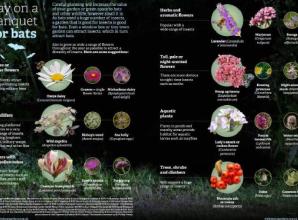
If you want to help bats at home, you could put up a bat box or plant a “Moon Garden” and provide a banquet for bats. Or, should you like bats and creative writing, you could have a go at the Bat Conservation Trust’s “Bat’s Laureate Competition”. Two categories — under 12 and 12 to adult. Closing date for submissions is February 28. For more information, visit www.bats.org.uk
………...........................................
FINALLY, don’t forget the RSPB big garden bird watch this month, just an hour on January 23 to 25. We will keep you posted about other events. Meanwhile, Happy New Green Year!
Most read
Top Articles

SUPERMARKET chain Aldi has confirmed that it plans to open a new food store in Henley. The Henley Standard revealed in May last year it was looking at the Jewson site, off Reading Road, with the materials firm set to move to the former Gibbs and Dandy...

FAMILIES who spent generations camping on an island in Shiplake are “heartbroken” now that the site has gone on the rental market. Former plot-holders at Shiplake Lock Island say that the Environment Agency, which owns it, have allowed it to...

© Copyright 2024 Baylis Community Media CIC All right reserved